Aperfect dresser Hot Dry Dry Hot Wet Cold Cold Wet

5280 the feet in a mile facto into 12 the inch in foot or 24 the hour in day this way

Moon Fact Sheet
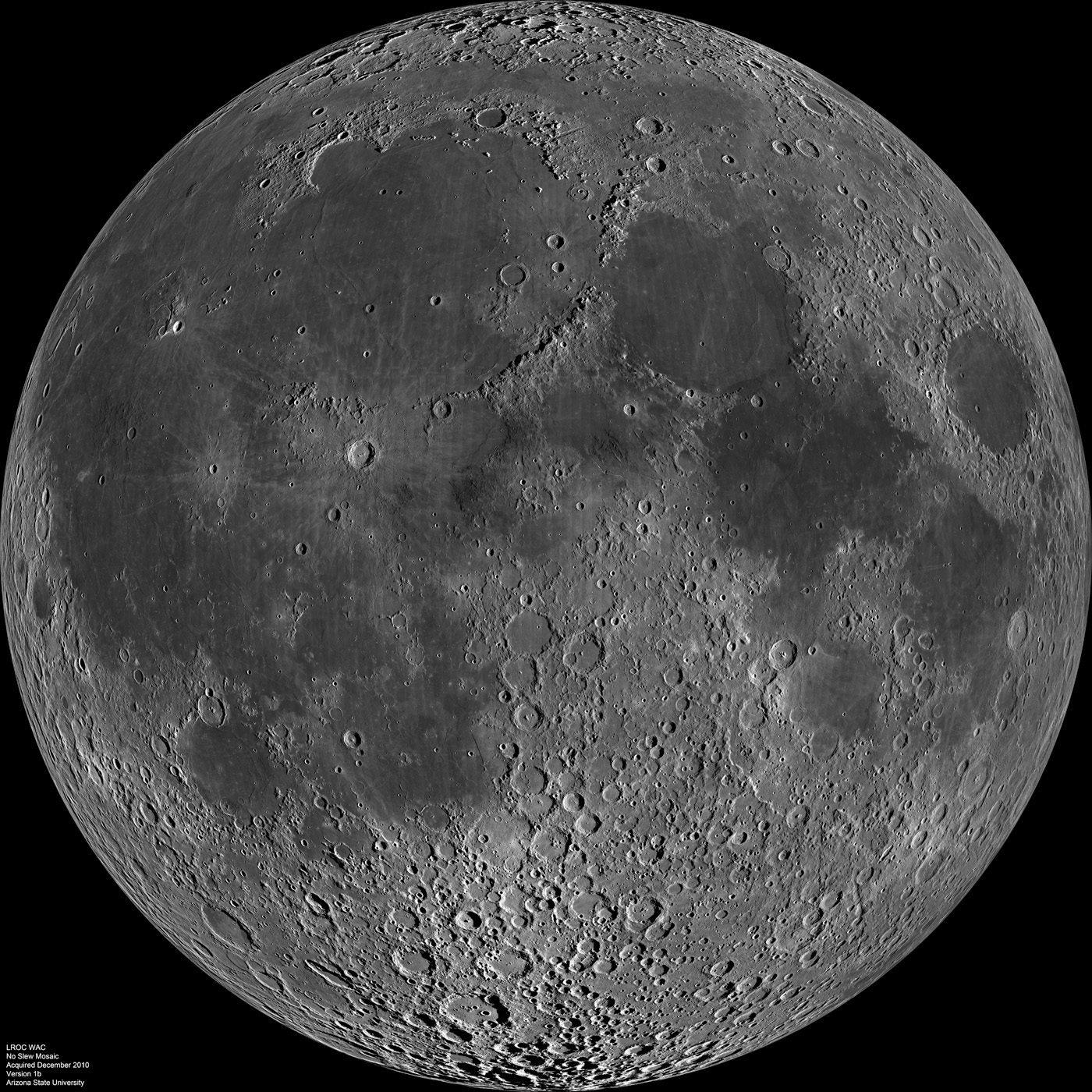
Moon/Earth Comparison
Bulk parameters
| Moon | Earth | Ratio (Moon/Earth) | |
|---|---|---|---|
| Mass (1024 kg) | 0.07346 | 5.9724 | 0.0123 |
| Volume (1010 km3) | 2.1968 | 108.321 | 0.0203 |
| Equatorial radius (km) | 1738.1 | 6378.1 | 0.2725 |
| Polar radius (km) | 1736.0 | 6356.8 | 0.2731 |
| Volumetric mean radius (km) | 1737.4 | 6371.0 | 0.2727 |
| Ellipticity (Flattening) | 0.0012 | 0.00335 | 0.36 |
| Mean density (kg/m3) | 3344 | 5514 | 0.606 |
| Surface gravity (m/s2) | 1.62 | 9.80 | 0.165 |
| Surface acceleration (m/s2) | 1.62 | 9.78 | 0.166 |
| Escape velocity (km/s) | 2.38 | 11.2 | 0.213 |
| GM (x 106 km3/s2) | 0.00490 | 0.39860 | 0.0123 |
| Bond albedo | 0.11 | 0.306 | 0.360 |
| Geometric albedo | 0.12 | 0.434 | 0.28 |
| V-band magnitude V(1,0) | -0.08 | -3.99 | - |
| Solar irradiance (W/m2) | 1361.0 | 1361.0 | 1.000 |
| Black-body temperature (K) | 270.4 | 254.0 | 1.065 |
| Topographic range (km) | 13 | 20 | 0.650 |
| Moment of inertia (I/MR2) | 0.394 | 0.3308 | 1.191 |
| J2 (x 10-6) | 202.7 | 1082.63 | 0.187 |
Orbital parameters (for orbit about the Earth)
| Moon | |
|---|---|
| Semimajor axis (106 km) | 0.3844 |
| Perigee (106 km)* | 0.3633 |
| Apogee (106 km)* | 0.4055 |
| Revolution period (days) | 27.3217 |
| Synodic period (days) | 29.53 |
| Mean orbital velocity (km/s) | 1.022 |
| Max. orbital velocity (km/s) | 1.082 |
| Min. orbital velocity (km/s) | 0.970 |
| Inclination to ecliptic (deg) | 5.145 |
| Inclination to Earth equator (deg) | 18.28 - 28.58 |
| Orbit eccentricity | 0.0549 |
| Sidereal rotation period (hrs) | 655.720 |
| Obliquity to orbit (deg) | 6.68 |
| Recession rate from Earth (cm/yr) | 3.8 |
Mean values at opposition from Earth
        Distance from Earth (equator, km)   378,000
        Apparent diameter (seconds of arc)     1896
        Apparent visual magnitude               -12.74

* These represent mean apogee and perigee for the lunar orbit,
and were used for calculating the maximum and minimum velocities.
The orbit changes over the course of the year so the distance
from the Moon to Earth roughly ranges from 357,000 km to 407,000 km,
giving velocities ranging from 1.100 to 0.966 km/s.
Lunar Atmosphere
Diurnal temperature range (equator): 95 K to 390 K  (~ -290 F to +240 F)
Total mass of atmosphere:  ~25,000 kg
Surface pressure (night): 3 x 10-15 bar  (2 x 10-12 torr)
Abundance at surface: 2 x 10⁵ particles/cm3

Estimated Composition (night, particles per cubic cm):
    Helium 4 (4He) - 40,000 ; Neon 20 (20Ne) - 40,000 ; Hydrogen (H2) - 35,000
    Argon 40 (40Ar) - 30,000 ; Neon 22 (22Ne) - 5,000 ; Argon 36 (36Ar) - 2,000
    Methane - 1000 ; Ammonia - 1000 ; Carbon Dioxide (CO2) - 1000
    Trace Oxygen (O+), Aluminum (Al+), Silicon (Si+)
    Possible Phosphorus (P+), Sodium (Na+), Magnesium (Mg+)

Composition of the tenuous lunar atmosphere is poorly known and variable,
these are estimates of the upper limits of the nighttime ambient atmosphere
composition.  Daytime levels were difficult to measure due to heating and
outgassing of Apollo surface experiments.
For information on the Earth, see the Earth Fact Sheet.
The angular speed of Earth's rotation in inertial space is (7.2921150 ± 0.0000001)×10−5 radians per SI second.[36][n 4]
Multiplying by (180°/π radians) × (86,400 seconds/day) yields 360.9856 °/day, indicating that Earth rotates more than 360° relative to the fixed stars in one solar day. Earth's movement along its nearly circular orbit while it is rotating once around its axis requires that Earth rotate slightly more than once relative to the fixed stars before the mean Sun can pass overhead again, even though it rotates only once (360°) relative to the mean Sun.[n 5] Multiplying the value in rad/s by Earth's equatorial radius of 6,378,137 m (WGS84 ellipsoid) (factors of 2π radians needed by both cancel) yields an equatorial speed of 465.10 metres per second (1,674.4 km/h).[41] Some sources state that Earth's equatorial speed is slightly less, or 1,669.8 km/h.[42] This is obtained by dividing Earth's equatorial circumference by 24 hours. However, the use of the solar day is incorrect; it must be the sidereal day, so the corresponding time unit must be a sidereal hour. This is confirmed by multiplying by the number of sidereal days in one mean solar day, 1.002 737 909 350 795,[36] which yields the equatorial speed in mean solar hours given above of 1,674.4 km/h.


Comments
Post a Comment